Whoa!
I woke up thinking about wallets this morning, honestly.
There is a weird confidence people put into browser extensions that surprises me.
Initially I thought a simple seed phrase manager would be enough, but then I watched a friend lose access after a phishing extension impersonated their wallet and realized the ecosystem needed smarter UX and stronger compartmentalization across chains, especially as people juggle tokens on Ethereum, BSC, Arbitrum and layer-2s.
My instinct said something felt off about the easy approvals flow.
Seriously?
People casually approve permissions without really reading them, sadly.
That behavior scales badly as you add more chains and dapps.
On one hand a multi-chain wallet reduces friction by letting you manage many networks from a single extension, though actually that consolidation increases your attack surface and compounds cognitive load for novices who don’t understand nonce management or chain ID mismatches.
Okay, so check this out—there are trade-offs you can’t ignore.
Hmm…
Browser extension wallets are still the easiest UX for day-to-day DeFi.
They are also the riskiest if the user mixes chains or runs many approvals.
My friend used one extension to hop between mainnet and testnet tokens, and when a malicious site requested broad allowances the extension’s account abstraction leaked state across chains, which created a subtle, cascading compromise.
I’m biased, but that part really bugs me a lot.
Here’s the thing.
Good multi-chain wallets solve for three things: security, UX, and predictable gas management.
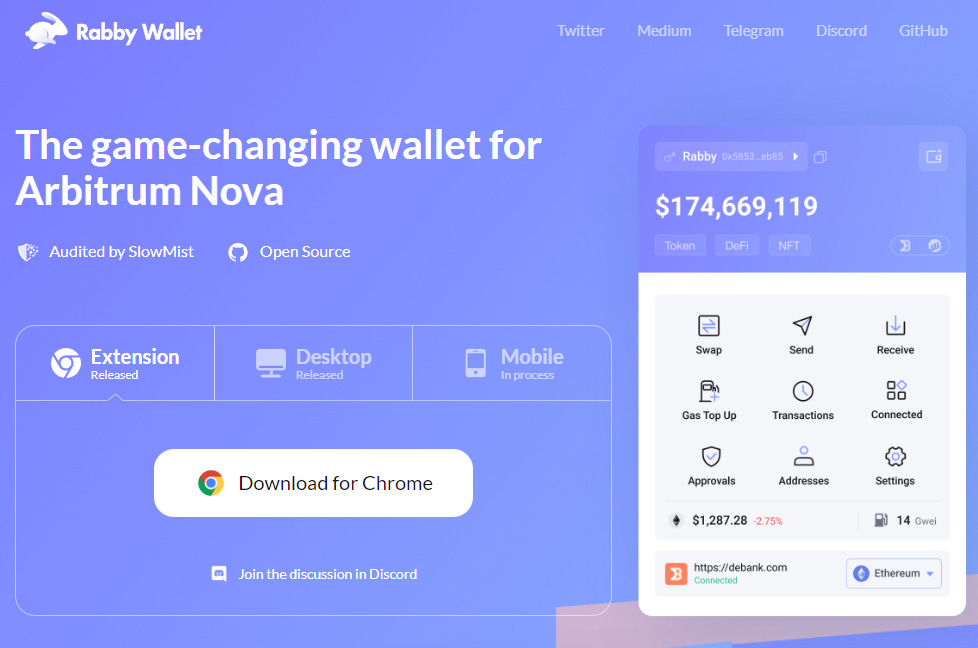
Rabby wallet nails a lot of that balance in practice.
Seriously, it’s built with per-site permissions, transaction simulation, and an approvals manager which, when used deliberately, cuts the noise of repeated approval popups while preventing blanket allowances that eat your funds.
Something felt off about other wallets’ transaction previews though, and this one gives clearer diffs.
What I did when testing wallets
I installed rabby wallet during a late-night testing session.
The onboarding felt familiar, but it shipped with smarter defaults out of the box.
Initially I thought it would slow me down, however the workflow’s batching and gas estimation saved me time and prevented a near-miss where a token approval would’ve drained a test wallet due to a mispriced gas setting.
I’m not 100% sure it would stop every attack, mind you.
Really?
No tool is a silver bullet in DeFi, and incentives often outpace tech.
Phishing, social engineering, and browser-level exploits remain common and dangerous threats.
On the other hand, compartmentalizing accounts, using per-site permissions and hardware wallets for large balances creates practical defense-in-depth, though it does raise friction which many users resist until they’ve already lost funds.
My instinct said: require hardware for big moves, especially when multiple chains are involved.
Wow!
Permissions managers are underrated, though people rarely take time to audit them.
Transaction simulations that show token flows help a lot.
If a wallet can simulate an approval or a swap and show you a human-readable flow of who gets which token, when, and under what allowance, then novices stand a chance of avoiding accidental permissions that persist across chains and months.
By the way, Rabby has a built-in approvals manager that makes this easier.
Okay…
Here’s a practical checklist I use when testing wallets.
Use separate accounts for main balances and day-to-day trades.
Set per-site approvals and audit them weekly, enable hardware confirmations for anything over a threshold, and avoid blanket ‘infinite approvals’ unless you truly understand the dapp’s back-end and are willing to accept long-term exposure.
Also, keep a tiny hot wallet and a cold store for big holdings.
I’m not 100% sure, but…
Gas estimation across chains still confuses many regular users and leads to mistakes.
Layer-2s have different priority fees and sometimes require token wrapping or bridging.
A good extension shows chain context, suggests native token payment when possible, and warns you if a cross-chain call could trigger multiple approvals, which is a tiny UX thing but reduces costly errors over time.
I’ve seen it happen, twice in fact on mainnet.
So—what’s the takeaway?
Pick a wallet with clear permission controls and transaction previews that you can understand.
Test small transactions, segregate funds, and treat your browser like a semi-trusted device.
On one hand the convenience of multi-chain extensions is irresistible, though you should balance that convenience against the amplified risk, and decide your operational security practices accordingly.
If you want to try something pragmatic and modern, check this out: rabby wallet
FAQ
Do I need a multi-chain wallet?
If you interact with protocols on more than one network then yes, it makes life easier; however, use accounts and approvals wisely, and don’t mix large balances with everyday trading funds (oh, and by the way—segregation saves headaches).
Can browser wallets be made safe?
Safer, yes. Perfect, no. Combine per-site permissions, hardware confirmations, and regular audits of allowances; those steps are small but very very effective over time.
What’s one quick habit to adopt?
Always preview transactions, and if a dapp asks for an unlimited approval, pause and consider using a limited allowance instead.